ASK THE TRAINER:
WHAT IS THE HARDEST BREED OF DOG TO TRAIN?
A Tucson Dog Trainer’s Perspective
By Andrew C. Sherwood, Professional Dog Trainer with 25 years of experience.
Essentials: Understanding defiance
Reading time: 6 minutes
Best for: Working Dog Breeds
Key Takeaway: The hardest dogs to train aren’t unintelligent—they are unbiddable; breeds like Siberian Huskies understand commands perfectly, but require strong leadership to build real-world compliance.
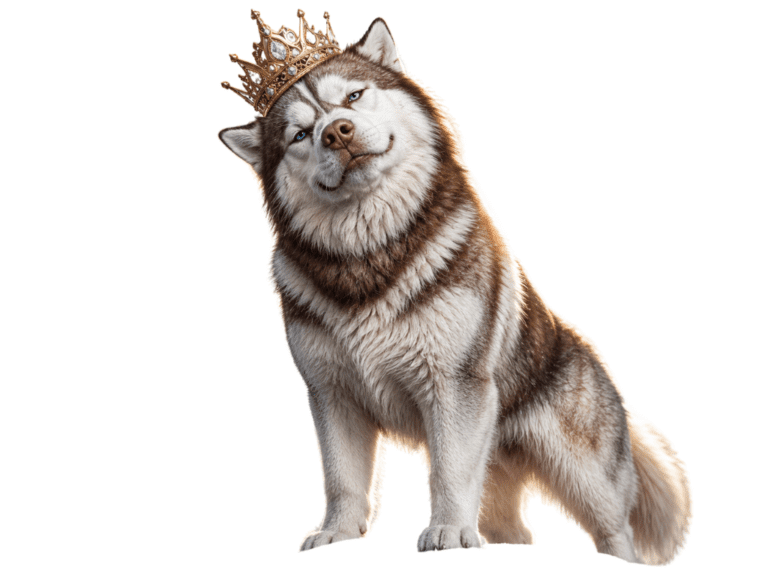
As an owner of five Siberian Huskies, I’ve always enjoyed conversations that explore my life’s choices. When people look for expert dog training in Tucson, the Husky is almost always nominated as the hardest dog to train.
They make more noise than a Beagle or a Basset Hound. Their prey drive is as high as an Akita or a Terrier. They are as smart as a Poodle or a German Shepherd.
Before we can name the hardest breed to train, we have to clarify what “hard” and “train” actually mean. At Black Belt Canine Academy, training means a dog learns a concept and reliably performs it on command. This is distinct from behavior modification, which is setting standards for habits like not digging holes or counter surfing.
By this standard, the hardest dog to train isn’t a dog that can’t learn—it’s a dog that understands what you want, but simply doesn’t feel like doing the chores.
WHY IT HAPPENS
The root cause comes down to a fundamental concept in professional canine training: biddability.
Biddability describes an animal’s inherent willingness to cooperate and focus on its handler. Highly biddable dogs (like Border Collies) naturally look to humans for direction. The antonym—unbiddable—describes dogs that are recalcitrant, headstrong, and independent.
| Breed | Task: Pulling a Sled | Task: Agility / Obedience Course |
| Siberian Husky | “YES!” (Stubbornness becomes a asset) | Laughs at the foolishness of the course. |
| Border Collie | Puts in a full-throated, loyal effort. | “YES!” (Thrilled to demonstrate skills) |
Why does a Husky refuse the obedience course? Because it was bred to make autonomous decisions over freezing, treacherous terrain—not to eagerly await human validation.
When you ask a Siberian Husky to do something, they aren’t asking “What does this mean?” They are asking “What’s in it for me?” When modern pet owners ask for basic, real-world obedience—solid recall, proper heel walks, threshold manners, and door boundary control—unbiddable breeds default to selective hearing because their natural drive overrides their desire to please you.
COMMON MISTAKES
When dealing with a headstrong or unbiddable dog, owners frequently make two major missteps.
Confusing Intelligence with Compliance
Owners often assume a stubborn dog needs more “explanations” or trick practice. Huskies don’t lack intelligence; in fact, they are capable of reading this article right off your browser and using AI to figure out how to break out of your backyard. Repeating commands over and over doesn’t teach them faster—it just proves that your requests are optional.
Relying Exclusively on Positive Reinforcement
Trying to treat-train an unbiddable breed in high-distraction environments creates a transactional relationship. If a squirrel runs by, or an open front door presents an escape route, the environment will always offer a higher reward than the food in your hand.
WHAT BLACK BELT CANINE ACADEMY DOES DIFFERENTLY
At Black Belt Canine Academy, we don’t try to bribe independent breeds, nor do we build training systems around soft exceptions. We utilize structured, martial-arts-inspired training philosophies to turn independent, strong-willed dogs into focused, reliable companions.
We Build Accountability: Rather than hoping a dog “feels like” obeying, we build a structured dynamic where compliance is clear, fair, and non-negotiable.
We Bridge the Gap Between Mindset and Capability: We respect the working drives of independent breeds (Huskies remain my absolute favorite breed of all time) and teach handlers how to channel that energy rather than fight against it.
Real-World Proofing: We train for the lifestyle needs of Tucson pet owners—whether you’re navigating the Catalina Foothills or downtown traffic—ensuring your dog listens when it actually counts.
FREQUENTLY ASKED QUESTIONS
Are Siberian Huskies really untrainable, or are they just stubborn?
Huskies are exceptionally smart, but they are highly independent. They were selectively bred to make autonomous decisions while pulling sleds over dangerous arctic terrain. This means they don’t possess the inherent desire to please humans that breeds like Border Collies have. A Husky understands what you’re asking—they are simply evaluating whether following your command benefits them in that moment.
What is the difference between "training" and "behavior modification"?
Training is teaching a command to be performed on request; behavior modification is changing a habit. For example, teaching a dog to “sit” or “come” when told is training. Stopping a dog from digging holes in the yard, jumping on counters, or barking at the window is behavior modification, as it sets a standard of behavior rather than executing a specific verbal cue.
What does "biddability" mean in dog training?
Biddability is a dog’s willingness to cooperate, focus, and take direction from a human handler. Highly biddable breeds (like German Shepherds or Retrievers) naturally look to humans for guidance. Unbiddable or independent breeds (like Huskies, Akitas, or Terriers) operate on self-motivation, making them more challenging for the average pet owner to train without structured accountability.
Can a Husky ever be trusted off-leash?
Yes, but it requires a high level of structured training and strong leadership. Because Huskies have exceptionally high prey drives and a natural desire to run, getting a reliable off-leash recall is far more difficult than with other breeds. Without proper proofing under high distraction, letting an independent breed off-leash in an unfenced area can be dangerous.
If my dog doesn't care about pleasing me, how do I get them to listen?
You must build structure and accountability into your relationship, rather than relying solely on treats. When a dog realizes that your commands are non-negotiable expectations rather than optional suggestions, their willingness to listen shifts. Working with a professional trainer to establish clear leadership dynamics ensures your dog respects your authority in high-distraction environments.
NEED PROFESSIONAL HELP?
Do you have a headstrong Husky, a high-drive Terrier, or a pup that simply refuses to listen to commands? You don’t have to navigate the frustration alone. At Black Belt Canine Academy, we specialize in turning independent, strong-willed dogs into focused, well-behaved companions using structured, martial-arts-inspired training philosophies.
Whether you live in the Catalina Foothills or downtown Tucson, most dog owners want a dog that reliably:
Won’t run away when the front door is left open.
Won’t pulverize a smaller pet (high prey drive).
Won’t destroy personal items.
Will heel correctly at their side during walks.
Will wait for permission to pass through a door.
Comes back immediately when called.
Can hold a solid sit-stay.
Whether you’re looking for basic puppy training or advanced behavioral modification in Pima County, we can help.
